CURRENTLY EDITING
James Curry's Post One Podcast Links & Podcast background historical information
China Detachments (R3) Kinshasa (R6) Frankfurt (R8) Lagos (R7), Madrid (R5).Baghdad (R2), Jeddah (R2) Bujumbura (R6), Georgetown (R4) Belmopan (R9), MCESG Page, Harare (R6),
MSG HISTORY VOLUNTEERS ARE NEEDED : Research and display content for the MSG History Archives: Contact history@msghistory.com
Return/GoTo http://www.embassymarine.org (MEGA Home Page)
BEIJING, CHINA
MCESG Region 3 (MSGBn Company C)
(Volunteer Detachment Archivist Needed)
Send updates / corrections to history@msghistory.com
Detachment Photos: BEIJING Photo Album
MAP: US Embassy Beijing, China
Contact: history@msghistory.com
COUNTRY INFORMATION
Recognized: 1844 / Relations established: 1844 / Embassy established: 1844
1949: The U.S. embassy moved to Taipei, Formosa, when the Nationalist government of China fled to Formosa.
1973: The U.S. Liaison Office opened in Beijing.
1979: The U.S. withdrew diplomatic recognition from the Nationalist government in Taipei and recognized the PRC government in Beijing. The U.S. continues to provide unofficial relations with Taiwan. (see also Taiwan–United States relations).
Country Profile: China
Source: Google Gemini (21Nov2026)
Official Name: People’s Republic of China
Capital: Beijing
Region: Eastern Asia
Population: ~1.41 billion (2026 est.)
Total Area: 9,596,960 km² (3,705,407 sq mi)
Official Language: Standard Chinese (Mandarin)
Currency: Chinese Yuan / Renminbi (CNY / ¥) / CURRENT EXCHANGE RATE
Government Type: Unitary Marxist–Leninist one-party socialist republic
GDP (Nominal): ~$21.5 trillion (2026 est.)
GDP per Capita (Nominal): ~$15,370 (2026 est.)
Calling Code: +86
Time Zone: China Standard Time (UTC+8)
Internet TLD / ISO Codes: .cn / CN, CHN
Travel Advisory (U.S.): Level 2 – Exercise Increased Caution (as of Oct 2026)
POTUS visits: Beijing / Nanking / Guangzhou (VPOTUS) / Hong Kong / Chengdu (VPOTUS) Shanghai / China
SECSTATE visits: Beijing /Nanking / Guangzhou / Hong Kong / Chengdu / Shanghai / China
US Ambassadors: China
Natural Disasters: Beijing /Nanking / Guangzhou / Hong Kong / Chengdu / Shanghai / Shenyang / China
Terrorism: Beijing /Nanking / Guangzhou / Hong Kong / Chengdu / Shanghai / China
Recognized: 1844 / Relations established: 1844 / Embassy established: 1844
1949: The U.S. embassy moved to Taipei, Formosa, when the Nationalist government of China fled to Formosa.
1973: The U.S. Liaison Office opened in Beijing.
1979: The U.S. withdrew diplomatic recognition from the Nationalist government in Taipei and recognized the PRC government in Beijing. The U.S. continues to provide unofficial relations with Taiwan. (see also Taiwan–United States relations).
Marine Corps Embassy Security Group:
MCESG / Region1 / Region2 / Region3 / Region4 / Region5 / Region6 / Region7 / Region8 / Region9 / MSAU / MSGTC
Together We Served: Beijing
US Embassy: Beijing, China
US Consulate: Guangzhou / Hong Kong /Shenyang / Shanghai
US Embassy Nanking: (closed April, 1949)
US Consulate in Chengdu: (Closed July 2020 - in retaliation for US Closing Houston, Texas Chinese Consulate)
US Embassy Taipei Republic of China: (Closed / deactivated February 28 1979 )
Britannica: Beijing / Shanghai / Guangzhou / Hong Kong / Shenyang / China
Google: Beijing / Shanghai / Guangzhou / Hong Kong / Shenyang / China
Wikipedia: Beijing / Shanghai / Guangzhou / Hong Kong / Shenyang / China
DOS History: Beijing / China
Travel: Beijing / Shanghai / Guangzhou / Hong Kong / Shenyang / China
Time: Beijing / Shanghai / Guangzhou / Hong Kong / Shenyang / China
Weather: Beijing / Shanghai / Guangzhou / Hong Kong / Shenyang / China
Phrase Book: Beijing / Shanghai / Guangzhou / Hong Kong / Shenyang / China
Google News: Beijing / Shanghai / Guangzhou / Hong Kong / Shenyang / China
X.com: US Embassy - Beijing
INSTAGRAM: US Embassy - Beijing /Shanghai / Guangzhou / Hong Kong / Shenyang /
FACEBOOK: US Embassy - Beijing /Shanghai / Guangzhou / Hong Kong / Shenyang /
FACEBOOK: MCESG MSGDuty Group
FACEBOOK: MEGA Group
YOUTUBE: 2015 - US Embassy Beijing
YOUTUBE: 2008 - New US Embassy Beijing
YOUTUBE: 2015 - POTUS Bush dedicates New Embassy
YOUTUBE: 2018 - Small Bomb blast outside Embassy
YOUTUBE: 2020 - China seizes US Consulate in Chendu
YOUTUBE: 2023 - 10 best places to visit in Beijing
YOUTUBE: 2025 - Where to eat in Beijing
YOUTUBE: 2025 - Food Tour 24 Hours eating in Beijing
DETACHMENT HISTORY
(Source: Google Genini 18November2026)
The history of Marine guards at the U.S. diplomatic mission in Beijing spans two distinct eras: the pre-1949 Peking Legation/Embassy Guard (regular Fleet Marine Force troops) and the modern Marine Security Guard (MSG) Detachment established under the State Department–Marine Corps Memorandum of Agreement when U.S.–PRC relations resumed in 1973.
Below is the chronological record of major historical incidents, diplomatic standoffs, and security crises that directly impacted the Marine detachment in Beijing.
Siege of the International Legations (Boxer Rebellion)
June – August 1900
During the Boxer Uprising, a 50-man Marine legation detachment led by Captain John T. Myers defended the American compound in Peking alongside Allied forces during a 55-day siege. Private Daniel Daly earned the first of his two Medals of Honor holding a section of the Tartar Wall single-handedly against Boxer assaults. Following the siege, a permanent Marine Legation Guard (later designated Marine Detachment, American Embassy, Peiping) remained in the city for four decades.
Capture of the Peking Embassy Guard at the Outbreak of WWII
December 8, 1941
Immediately following the attack on Pearl Harbor, Imperial Japanese forces surrounded the U.S. Embassy compound in Peiping (Beijing) and the Marine detachments in Tientsin and Chinwangtao. Outnumbered and cut off from reinforcement, the North China Marines surrendered without destruction of the compound. The Beijing detachment—along with the rest of the 204 captured North China Marines and Navy medical personnel—was interned in Japanese POW camps (including Woosung and Kiangwan near Shanghai) until the end of the war in 1945.
The 'Uniform Incident' at the U.S. Liaison Office
May – November 1973
When the U.S. Liaison Office (USLO) opened in Peking in May 1973—23 years after Marines last left mainland China—a six-man MSG detachment arrived to secure the compound. Because the U.S. and PRC did not yet have formal diplomatic recognition, the presence of uniformed U.S. military personnel became an immediate political flashpoint. On July 4, 1973, Chinese officials formally objected to Marines wearing uniforms, and in November 1973 Premier Zhou Enlai personally raised the issue with Secretary of State Henry Kissinger at the Great Hall of the People—noting both their uniforms and a Marine recruiting poster visible inside their apartment. As a result, the detachment was required to stand post in civilian attire and keep all weapons strictly concealed inside the chancery until formal normalization in 1979.
Establishment of the Formal Embassy Detachment
March 1, 1979
With the normalization of U.S.–PRC relations and the transition of the Liaison Office into the full U.S. Embassy in Beijing, the detachment officially assumed traditional MSG status. Marines were permitted to wear Dress Blues and service uniforms inside the chancery and Marine House, though perimeter gate security remained the responsibility of Chinese People's Armed Police (PAP) guards.
Tiananmen Square Crackdown, Dissident Sanctuary & 'Tank Man' Film
June 1989
During the June 1989 military crackdown in Beijing, the MSG detachment operated under heightened threat conditions as PLA troops secured the surrounding diplomatic compounds. Two major events directly involved the detachment's post operations:
Sanctuary of Fang Lizhi: On June 5–6, prominent astrophysicist and dissident Fang Lizhi and his wife Li Shuxian sought refuge inside the U.S. Embassy, triggering a 13-month diplomatic standoff. Chinese security forces encircled the compound and heavily scrutinized all entries and exits, placing the MSG detachment on sustained internal security watch to protect the compound from potential incursion.
Smuggling of the 'Tank Man' Film: After Associated Press photographer Jeff Widener captured the iconic image of the lone protester blocking a column of Type 59 tanks on June 5, American student Kirk Martsen smuggled the undeveloped roll of film past PLA checkpoints to the U.S. Embassy, handing it directly to a Marine Security Guard on duty at Post One so it could be transmitted out via diplomatic channels.
Four-Day Siege Following the Belgrade Embassy Bombing
May 8 – 11, 1999
After NATO aircraft accidentally bombed the Chinese Embassy in Belgrade on May 7, 1999, tens of thousands of state-transported protesters surrounded the U.S. Embassy compound in Beijing. For four days, crowds hurled bricks, paving stones, paint bombs, and Molotov cocktails, shattering nearly every window in the chancery and overturning diplomatic vehicles. Ambassador James Sasser and embassy personnel—including the MSG detachment—were trapped inside the battered compound without running water or outside resupply. The Marines maintained internal barricades and perimeter watch inside the chancery doors while Chinese police held the outer gate line, preventing a full breach of the secure interior.
EP-3 Hainan Island Collision Standoff
April 1 – 11, 2001
Following the mid-air collision between a U.S. Navy EP-3E reconnaissance aircraft and a PLA Navy J-8II interceptor off Hainan Island, intense nationalist anger flared outside the Beijing embassy. Unlike in 1999, Chinese authorities tightly controlled street access around the diplomatic quarter, while the MSG detachment maintained heightened alert posture throughout the 11-day detention of the 24 U.S. crew members.
Sanctuary of Activist Chen Guangcheng
April 26 – May 2, 2012
After escaping house arrest in Shandong Province, blind legal activist Chen Guangcheng was brought into the U.S. Embassy in Beijing by U.S. diplomats. During his six-day stay at the compound while high-level negotiations took place with the Chinese government, Chen was housed and protected inside the Marine Security Guard quarters (Marine House/dormitory) under continuous MSG and Diplomatic Security watch until his departure to Chaoyang Hospital.
Improvised Explosive Device Outside the Embassy Compound
July 26, 2018
A 26-year-old man detonated an improvised firework-based explosive device outside the southeastern corner of the U.S. Embassy compound in Chaoyang District (which had relocated to its new high-security complex in 2008). The blast injured the attacker's hand and damaged a nearby police vehicle, prompting an immediate lockdown of the compound by the MSG detachment and Diplomatic Security personnel; no embassy staff or Marines were injured.
Key Operational Distinctions for MSG Detachment Beijing
Host-Nation Perimeter Rules: Throughout the PRC era (1973–present), armed U.S. Marines have been restricted to internal security posts inside the chancery and Marine House, while uniformed Chinese People's Armed Police (PAP) guard the exterior gates and sidewalks.
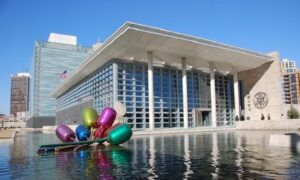
Compounds: From 1973 to August 2008, the detachment operated out of the legacy compounds in the Jianguomenwai diplomatic district (Chancery at Xiushui Beijie), before moving to the current 10-acre New Embassy Compound (NEC) in Chaoyang District.
2024
Detachment Commander
Watchstanders
1979
NCOIC
Watchstanders
01 March: Detachment Activated
MSG Detachment Photo Album
Send pictures, descriptions and references to history@msghistory.com
1) 1973 - MSG Detachment, Ambassador, RSOs
2) 1989 - Detachment Photo with POTUS Nixon


Send your MSG History
Including Historical Incidents, MSG Names, Det Commander/NCOIC, RSO, Company Officers