Currently editing:
James Curry's Post One Podcast Links & Podcast background historical information
Gabarone (R6) Rome-Holy Sea (R5), Tokyo(R3), Jakarta (R3), Seoul (R3), Kuala Lumpur (R2), Colombo (R2), Montevideo (R4), Santo Domingo (R4)
MSG HISTORY VOLUNTEERS ARE NEEDED : Research and display content for the MSG History Archives: Contact history@msghistory.com
Return/GoTo http://www.embassymarine.org (MEGA Home Page)
Post One Podcast
with James Curry
About
Post One Podcast
Marine Embassy Guards serve in some of the most remote and politically volatile places on earth, often alone, unseen, and far from home. Post One is a storytelling podcast that brings their experiences to life. Each episode features candid conversations with Marines who stood watch at U.S. embassies and consulates around the world, saving lives, safeguarding secrets, and navigating cultures most Americans will never see. From tense standoffs and high-stakes evacuations to quiet moments of connection, these are the unfiltered stories of Marines serving on the front lines of American diplomacy.
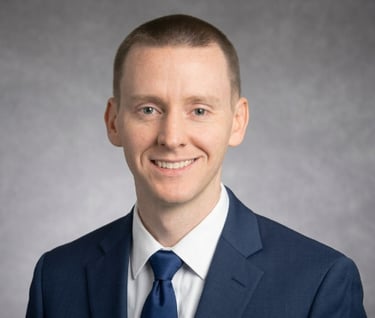
Hosted by James Curry | James@PostOnePodcast.com | Send Comments

Aug 11, 2026
No Days Off: A Marine Security Guard on the Reality of Embassy Duty
in Liberia, China, and Estonia
MSG: Ken Hayles
Monrovia, Beijing, Tallinn
Marine Security Guard Ken Hayles served three U.S. Embassy posts — Liberia, China, and Estonia — each a completely different world. In this episode, he describes arriving in Monrovia as a first-post Marine and running a short-staffed detachment with no days off, the culture shock of a developing country, and the strange intimacy of searching cleared Americans' offices for classified information. He recounts the night he spotted a figure by the embassy wall and called it in as a threat, only to learn it was a local child using the security lights to do homework. He explains contact reporting — how Marine Security Guards pull personal details out of strangers — and the time it flagged a woman in Tallinn he was told to stay away from. He also covers host-nation surveillance at the U.S. Embassy in Beijing and a rough transition out of the Marine Corps that landed him in a separations unit at Camp Pendleton.
msghistory.com Historical Links
(Liberia)
msghistory / MSG Detachment Monrovia
Assoc of Diplomatic Studies: Should I Stay or Should I Go? Evacuating Liberia, 1990.
American Foreign Service Association: Fear Descends on Liberia
National Archives: Clinton White House Archives
National Archives: 1996 White House Letter to Congress
Wikipedia: Operation Sharp Edge
DVIDS: US Marines Kill 4 Liberians Attacking US Embassy
(China)
msghistory / MSG Detachment Beijing
Wikipedia: Article on the Embassy of the United States, Beijing
American Foreign Service Association : Diplomats, Firecrackers, and a Checker Cab: The Opening of U.S. Embassy Beijing
(Estonia)
msghistory / MSG Detachment Tallinn
Wikipedia: Wikipedia Page for Embassy of the United States, Tallinn.

E31 / Aug 4, 2026
Embassy in Ruins: A Marine Security Guard and the 1972 Managua Earthquake
MSG: Sergeant Anthony Trzupek
Managua, NIcaragua
When the 1972 Managua earthquake struck Nicaragua on December 23, it killed thousands and destroyed much of the capital. Anthony Trzupek was the senior Marine Security Guard at the U.S. Embassy that night, and with the detachment commander away, he was the one in charge. In this episode, he recounts surviving the violent 48 seconds of shaking, reaching the embassy through the wreckage, and leading the effort to rescue American staff from collapsed buildings — including a secretary trapped in a crushed townhouse. He describes the days that followed: securing the embassy against looters, evacuating American citizens, the death of the U.S. consul general, and the lasting toll the disaster took on him, including a decades-long struggle with PTSD and alcohol and his eventual recovery.
msghistory.com Historical Links
(Niciragua)
msghistory / MSG Detachment Beijing
American Foreign Service Association: ADST Sandinista Transition Feature,
American Foreign Service Association: ADST Embassy Managua Unwelcome Guest Story
University of New Mexico: 1989/90 Embassy Blockades (Panama / Niciragua)
New Your Times: 1985 Embassy Briefing


July 28, 2026
Breaking Protocol: An MSG's Fight to Save Two Americans in Yemen
Post One Podcast Episodes
MSG: Gregg Jones
Posts: Geneva, Sanaa
Retired Gunnery Sergeant Gregg Jones served as a Marine Security Guard detachment commander in Geneva, Switzerland and Sanaa, Yemen. In Yemen, he heard a distress call over the radio late at night, broke protocol, and fought his way through a crowd of armed Yemenis to rescue two American servicemen who were minutes from being killed. He also helped evacuate the embassy when the security situation deteriorated, coordinating the safe departure of personnel with no support from the US government..


July 21, 2026
Card Declined: How a Failed Transaction Led a Marine to the MSG Program
Post One Podcast Episodes
MSG: AJ Inman
Posts: Botswana, Bratislava, and Brasilia
AJ Inman never planned on becoming a Marine Security Guard. A chance encounter with MSG recruiters in Okinawa — and a debit card that wouldn't work at the worst possible moment — put him on a path that took him to Botswana, Bratislava, and Brasilia. In this episode, Inman talks about MSG school, the collateral duties that nobody warns you about, what it's really like standing Post One, and why the friendships you make on the program are unlike anything else in the Marine Corps.


July 14, 2026
Ken Kraus: The First American Hostage in Iran
Post One Podcast Episodes
MSG: Ken Kraus
Posts: Cyprus,Tehran
Marine Security Guard Ken Kraus was the first American taken hostage in Iran. On Valentine's Day 1979, the US Embassy in Tehran was overrun by armed militants. Kraus was shot, beaten, and thrown into prison, where he was tortured, put on trial before a panel of mullahs, and sentenced to death. He refused to break. He made it out with minutes to spare.
Ken Kraus: A Marine Endures Hell: The First Marine Held Hostage in Iran During the Iranian Hostage Crisis of 1979


July 7, 2026
Jeanne Jacko: The First Female Marine Security Guard
Post One Podcast Episodes
MSG: Jeanne Jacko
Posts: Amman, Paris
In 1979, Jeanne Jacko became the first female Marine Security Guard. She served in Amman, Jordan and Paris, France — part of a ten-woman test program that opened doors female Marines are still walking through today. When the Iranian hostage crisis and the Karachi riots broke out, the State Department pulled the female MSGs from their posts. Jeanne talks about what it felt like to be ordered out, what the program meant to her, and why her photo ended up on a mural at the Women's Memorial in Washington, D.C.
For the full story of what happened in Karachi, check out our earlier episode with Vicki Gaglia-McGuire.
Other episodes mentioned... Tehran 1979: Inside the First U.S. Embassy Takeover in Iran


June 30, 2026
Trey Salmon: The First MSG Awarded the Combat Action Ribbon for El Salvador
Post One Podcast Episodes
MSG: Trey Salmon
Posts: Calcutta, San Salvador,
Trey Salmon served as a Marine Security Guard in Calcutta, India and San Salvador, El Salvador. On Christmas night 1989, he found himself in the middle of a firefight between FMLN guerrillas and the Salvadoran Armed Forces. In Calcutta, a taxi hit him mid-run, broke his leg, and left him fighting gangrene in an Indian hospital. When he got home, he spent nearly a decade navigating Marine Corps bureaucracy to earn the Combat Action Ribbon for himself and every embassy Marine who served in El Salvador.
For the full story of the 1985 Zona Rosa attack, check out our earlier episode with survivor Anton Koszuth (Podcast: January 27, 2026 )


June 23, 2026
Breaking New Ground: The First Career Detachment Commander in Marine Security Guard History
Post One Podcast Episodes
Detachment Commander: Jesse Wagner
Posts: Bishkek, Canberra
Jesse Wagner is the first career detachment commander in the history of the Marine Security Guard program — a title that didn't exist until he helped create it. In this episode, he breaks down what that means, how the MOS got built from the ground up, and why the program needed it.
Beyond that, Jesse pulls back the curtain on MSG school as it exists today — what's getting Marines dropped, how the risk assessment board actually works, and why the answer to what disqualifies most Marines will surprise you. He also addresses the RSO relationship, mental health on the program, and where he sees the career detachment commander MOS going in the next decade.
If you want to understand what the MSG program looks like today, this is the episode
June 16, 2026
The Replacements: Resetting the Marine Security Guard Detachment in Shanghai
Post One Podcast Episodes
MSG: Chris Wright
Posts: Shanghai, Berlin
When an entire Marine Security Guard detachment in Shanghai got sent home, the Marine Corps needed replacements they could trust. Chris Wright was one of them.
Shanghai was a designated country post — the highest hostile intelligence threat on the program. The restrictions were tight, the scrutiny was real, and the pressure to not make things worse was constant. Chris and the incoming Marines knew exactly what had happened before them and why it couldn't happen again.
From Shanghai, Chris went to Berlin in the mid-90s, where he witnessed firsthand the lasting divide between East and West Germany years after the wall came down. He also met the woman who would become his wife..
June 9, 2026
Still Standing: The Luckiest Marine on the MSG Program
Post One Podcast Episodes
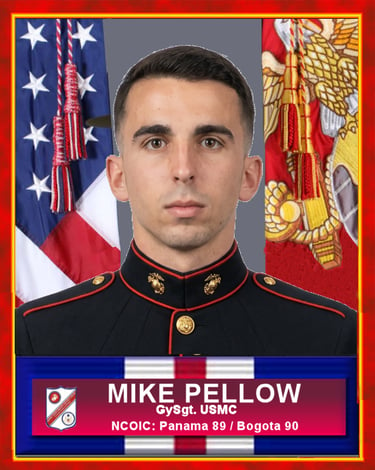
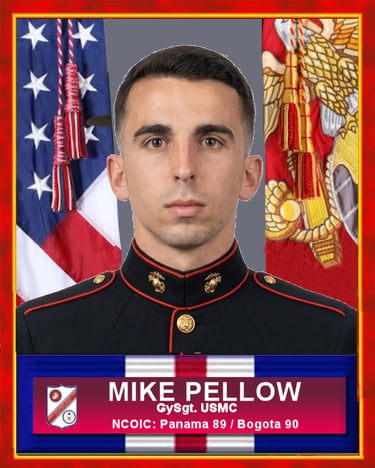
NCOIC: Mike Pellow
Posts: Panama, Bogota 89-90
Before Mike Pellow held the U.S. Embassy in Panama through a night of RPG attacks during the U.S. invasion (March 4th), he was a young sergeant on his first MSG tour in Cold War Leningrad — and he was already finding trouble.
A night out with the wrong people ended with Mike and a fellow Marine in a Soviet holding room, a man with a gun posted at the door, and the phone getting ripped out of their hands every time they tried to call the consulate. That was just the beginning. In Copenhagen, the woman he was dating turned out to be working as an East German spy.
Then Clayton Lonetree turned himself in and Mike's name kept coming up during the investigation.
What makes this episode more than just a collection of close calls is what Mike did each time — and what the people around him chose to do with the evidence in front of them. An RSO who remembered the truth. A battalion commander and a company commander who both believed in Mike. And a Sergeant Major who picked up the phone and changed Mike's entire trajectory with one conversation.
Luck matters in the Marine Corps. So does the company you keep.
Hear Mike's incredible story as a Detachment Commander in Panama on the March 4th Podcast
June 2, 2026
Beirut: When the US Embassy Annex Was Bombed
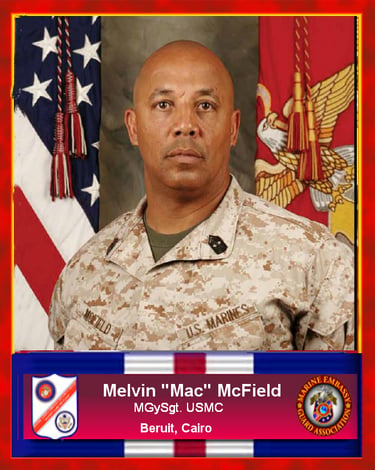
MSG: Melvin "Mac" McField
Posts: Beirut , Lebanon
Melvin "Mac" McField was in a shoe store in Beirut when the walls shook. The radio said the American Embassy annex had just been bombed. He raced back to the compound. That night, the RSO came to the Marine House with a warning — they were next. Mac and his buddy climbed to the rooftop armed and ready. What happened up there, he still can't fully remember. What followed were decades of untreated PTSD, drinking, fighting, and NJPs — things he never told anyone because he didn't want to be seen as broken. Somehow, through all of it, he made it to Master Gunnery Sergeant. This episode is about the bombing and the long road after.
You can hear about this incident from another perspective on Episode 11, Burying Ghosts: A Marine's Account of the 1984 U.S. Embassy Bombing in Beirut
May 26, 2026
MSG Det Uganda: The Uzi, The Coup, The Condoms
MSG: George Holguin
Posts: Kampala, Uganda
In 1986, Staff Sergeant George Holguin arrived in Kampala, Uganda as a brand new detachment commander with one mission — establish the first permanent MSG detachment at the American embassy. Uganda had just come through a coup. On day one, the RSO handed him a .357 and an Uzi and told him to carry both around the clock. George talks about building a detachment from scratch in a post-coup country, navigating armed checkpoints, keeping young Marines focused, and an ambassador who had a very specific welcome for every single person who walked through his door — including a handful of condoms.


May 19, 2026
Under Arrest: The Night Yugoslav Secret Police Took an MSG
MSG: Jim Vetternik
Posts: Belgrade, Yugoslavia / Madrid, Spain
Jim Vetternik was an MSG at the U.S. Embassy in Belgrade when Yugoslav secret police arrested him outside a casino and threw him in an interrogation room. What happened over the next five hours is something most Marines never experience — and something the Marine Corps would rather not talk about.
That wasn't even the strangest night of his MSG career. That came later in Madrid, standing post outside the Secretary of State's hotel room, when a three-hour massage turned into a diplomatic situation nobody had a protocol for.
May 12, 2026
Midnight in Minsk, Standing Post When the World Might End
MSG: Bill Gwaltney
Posts: Minsk,
In this episode of the Post One Podcast, retired Marine Bill Gwaltney takes us back to the late 1990s and life as an MSG in Cold War Belarus. Bill shares what it was like standing post in Minsk during the Y2K scare with embassy vehicles gassed up and a plan to run for the Lithuanian border, navigating constant counterintelligence threats, and accidentally CS gassing the Russian embassy next door.
May 5, 2026
Tehran 1979: Inside the First Embassy Takeover in Iran
Post One Podcast Episodes
MSG: Glenn Parsons
Posts: Tehran, Iran
Former MSG Glenn Parsons takes us inside the first takeover of the U.S. Embassy in Tehran in 1979. Glenn arrived in Iran to 100,000 people chanting "Death to America" at the airport. Weeks later, armed attackers stormed the compound. Glenn dodged sniper fire sprinting to his post, destroyed classified material as rounds came through the walls, and was lined up against a brick wall with machine guns aimed at the group. He shares how the Marines prepared to rush the guns, how the ambassador negotiated with the clerics at bayonet point, and how Glenn's own words to a captor nearly cost a fellow Marine his life.
April 28, 2026
The Fall of Saigon: From Dress Blues to Bayonets
MSG: MGySgt Doug Drummond
Posts: Saigon, Taiwan (1975-78)
Retired Master Gunnery Sergeant Doug Drummond takes us back to 1975 Saigon, where he served as a young Lance Corporal. Doug shares what it was like to go from standing post in Dress Blue Charlies to wearing flak jackets and fixing bayonets as North Vietnamese forces closed in on the city. He recounts burning classified documents around the clock, screening evacuees as helicopters landed in the embassy parking lot, discovering a pool full of discarded pistols, losing two fellow Marines to a rocket attack, and ultimately being lifted off the embassy rooftop on one of the last helicopters out during Operation Frequent Wind.


April 21 2026
Karachi Under Siege: The Female MSG the Marine Corps Tried to Erase
Post One Podcast Episodes
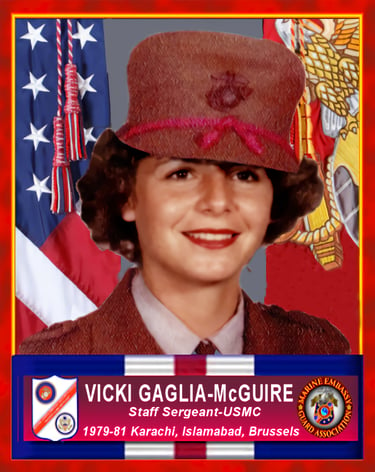
MSG: Vicki Gaglia-McGuire
Posts: Karachi
In 1979, the Marine Corps opened the MSG program to women for the first time. Only a handful were selected. Vicki Gaglia-McGuire was one of them — and when given the choice of posts, she picked Karachi, Pakistan.
What followed was a front-row seat to one of the most volatile moments in modern diplomatic history. Three weeks after American hostages were taken in Iran, 10,000 rioters descended on the U.S. Consulate in Karachi. Vicki was on Post One.
In this episode, Vicki takes us back to what it was like to be a female Marine in a program that wasn't built for her, standing post in a country that had never seen a woman carry a weapon, and holding the line the day everything went sideways. She also talks about what happened after — when the Marine Corps quietly pulled the women from their posts and told the world they were never there.
This is a story about being first, being erased, and refusing to stay quiet about either.
Female Marines Guard The Embassies: An Experiment in Social Progress and Cultural Change
April 14 2026
Part II - After the Bombing, Vienna, Yemen and the shady Ambassador.
Post One Podcast Episodes
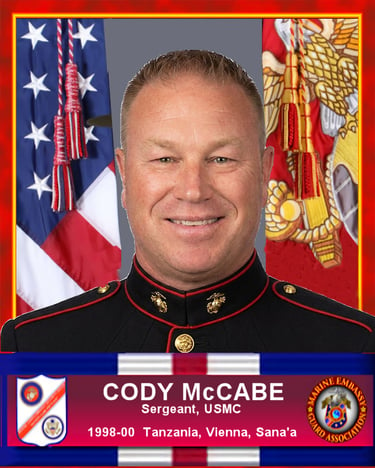
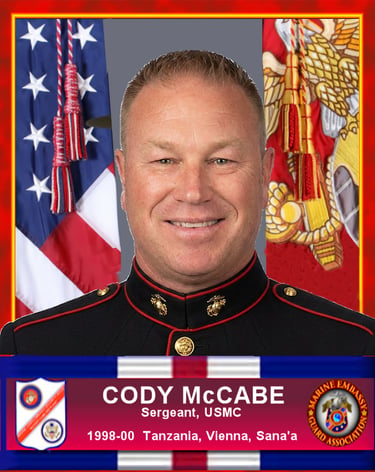
MSG: Cody McCabe
Posts: Tanzania, Vienna
In Part Two of our conversation, Marine Security Guard veteran Cody McCabe reflects on life after the 1998 embassy bombing in Tanzania — from struggling through a low-morale post in Vienna to being reassigned to Sana’a, Yemen following an NJP. Cody shares powerful stories about security threats, leadership, PTSD, and the moment he nearly became compromised while securing his visa, along with what it meant to stand Post One as riots built outside the embassy on his final day in country.
April 7, 2026
Part I : Chaos and Courage, Inside the Bombing of the US Embassy in Dar es Salaam
Post One Podcast Episodes
MSG: Cody McCabe
Posts: Tanzania, Vienna
On August 7, 1998, the U.S. Embassy in Dar es Salaam, Tanzania, was ripped apart by a terrorist bombing that changed lives forever. In this episode of the Post One Podcast, Marine Security Guard Cody McCabe walks us minute-by-minute through that day—what felt off the night before, the moment the blast woke him, and the chaos that followed as Marines scaled gates, entered a burning compound, and worked to secure the embassy with limited gear and no clear picture of the threat.
Cody’s account goes beyond headlines and history books. He describes the sounds, the confusion, the split-second decisions, and the emotional weight of being responsible for lives amid destruction. This is a raw, ground-level perspective of one of the earliest attacks in what would become the global war on terror—and a powerful reminder of what Marine Security Guards are trained to do when everything goes wrong.
March 31, 2026
Three Years, Three Posts: What Marine Security Guard Duty Really Looks Like
Post One Podcast Episodes
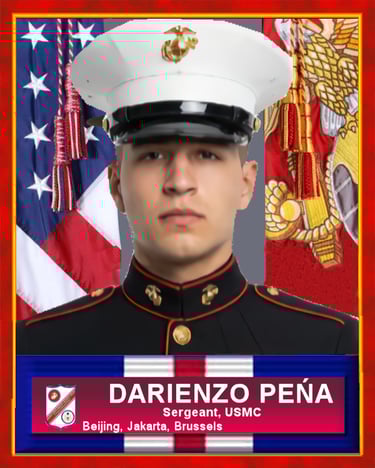
MSG: Darienzo Peña
Posts: Beijing, Jakarta, Brussels
Darienzo Peña was a Marine Security Guard who served at U.S. embassies in Beijing, Jakarta, and Brussels. He survived the intensity of MSG school, where great Marines get voted off the program and peer evaluations can end your tour before it starts. In Beijing, a stranger walked up and dropped an unmarked package in his lap at a coffee shop. In Jakarta, he was standing Post One when 25,000 protesters surrounded the U.S. Embassy. This is a candid, unfiltered account of what Marine Embassy Guard duty actually looks like from someone who lived it.
March 24, 2026
Abandoned in Panama: The MSG Detachment Nobody Came to Save
Post One Podcast Episodes
NCOIC: Mike Pellow
Posts: Panama, Bogota 89-90
In December 1989, the United States launched Operation Just Cause — a full-scale invasion of Panama. Nobody told Staff Sergeant Mike Pellow, the detachment commander at the U.S. Embassy, it was coming. His FAST team, the one that was supposed to reinforce him if things went bad, didn't show. What followed was hours of RPG attacks on an embassy held by seven Marines armed with shotguns and revolvers.
The embassy didn't fall. And for decades, most people never heard about it. The MSGs were barely recognized for their work. Years later, Mike is still fighting to make it right.
March 17, 2026
Burying Ghosts: A Marine's Account of the 1984 U.S. Embassy Bombing in Beirut
Post One Podcast Episodes
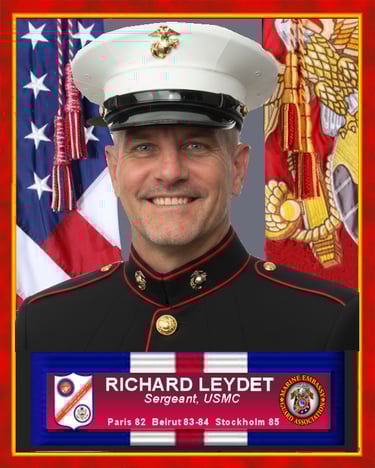
MSG: Richard Leydet
Posts: Paris, Beirut, Geneva
Marine veteran Richard Leydet reflects on his time as a Marine Security Guard during one of the most volatile periods in Beirut’s history. From surviving the embassy bombing to returning decades later, Rich offers a deeply personal look at the cost of service, the bonds forged under fire, and the long road toward healing.
Through candid conversation, he unpacks the realities of guarding U.S. embassies in war zones, the mental toll of trauma, and how Marines make sense of chaos long after the battle ends. His story is one of resilience, brotherhood, and reflection—showing that even after the smoke clears, the mission to understand and overcome continues.
March 10, 2026
The Detachment Commander: Leadership, Paperwork, and Reporting to the Commandant
Post One Podcast Episodes
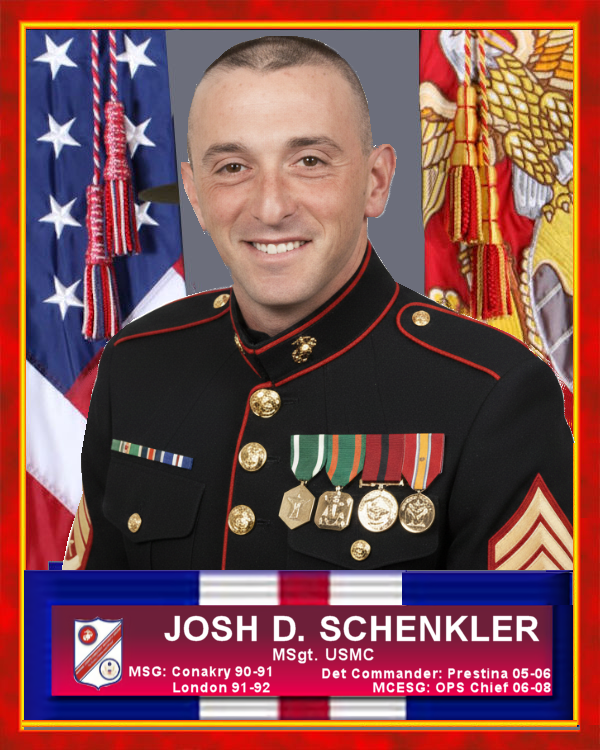
MSG / Detachment Commander / Ops 3 Chief: Josh Schenkler
Posts: Conakry 90-91 / London 91-92 NCOIC: Pristina MCESG: Ops Chief
Retired Master Sergeant Josh Schenkler breaks down the demanding role of the Marine Security Guard Detachment Commander — a billet unlike any other in the Corps. He discusses the selection and training process, leadership expectations, and the balance between administrative and operational duties. Schenkler also reflects on peer evaluations, family life at post, and the vital partnership between commanders and their A-Slash. The episode closes with his unforgettable experience reporting post to the Commandant of the Marine Corps.
March 3, 2026
On Our Own: An Attack on the U.S. Embassy in Tehran
Post One Podcast Episodes
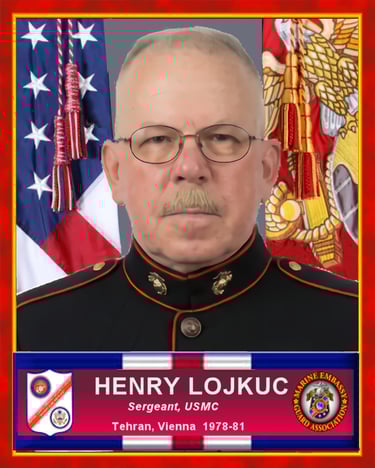
MSG: Henry Lojkuc
Posts: Tehran79, Vienna 80
On Valentine’s Day, 1979, the U.S. Embassy in Tehran was overrun. Former Marine Security Guard Henry Lojkuc believed he was about to be executed.
In this episode, Henry describes being outnumbered, cut off, and forced to rely only on fellow Marines. He speaks candidly about leadership failures, why he believes the Regional Security Officer was looking out for themselves, and how that day shaped him long after he left Iran.
February 24, 2026
Sex, Espionage, and the U.S. Marines: The Clayton Lonetree Story
Post One Podcast Episodes
Author: Rodney Barker
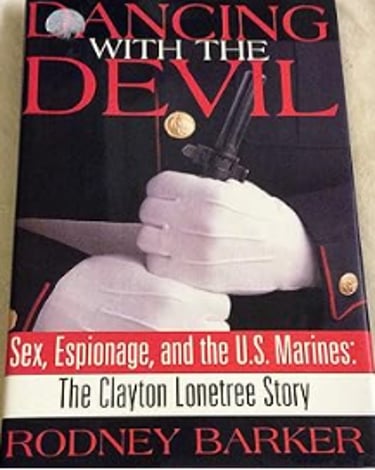
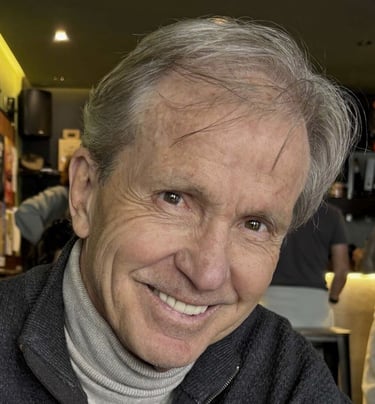
This conversation dives into the complex story of Clayton Lonetree, a Marine Security Guard whose romance with a KGB asset spiraled into one of the Cold War’s most debated espionage cases. Author Rodney Barker—whose book Dancing with the Devil: Sex, Espionage and the U.S. Marines: The Clayton Lonetree Story remains the definitive account—unpacks the human side of the scandal: loneliness, identity, and the seduction of feeling like “the exception.” We trace the relationship with Violetta and “Uncle Sasha,” the slow-burn tradecraft, Lonetree’s Vienna confession, and the bruising interagency investigation that followed. Along the way, Barker separates myth from fact (including the detachment-wide rumors) and situates the case alongside bigger intelligence failures of the era—offering practical lessons for today’s Marines about recruitment, social engineering, and safeguarding embassies without paranoia.
Book: Dancing with the Devil
Author: Rodney Barker
February 17, 2026
Counterintelligence: The MSG’s Role on the Frontlines
Post One Podcast Episodes
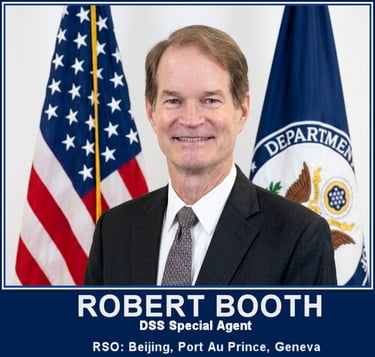
DSS Special Agent (Retired): Robert Booth,
Posts: Beijing, Port au Prince
In this episode, Former State Department Counterintelligence expert and RSO Robert Booth draws on decades of experience in diplomatic security to reveal the hidden world inside U.S. embassies. He explains how Marine Security Guards serve as the frontline eyes and ears for counterintelligence, why foreign spy services actively target them, and what makes them both an asset and a vulnerability. Booth walks through real-world cases — including the Clayton Lonetree espionage scandal and the Aldrich Ames betrayal — and breaks down how social media and platforms like LinkedIn have reshaped the modern espionage landscape.
YouTube Podcast : DSS
(2025) DSS After Action: Exposing Foreign Intelligence Operations
February 10, 2026
Command Decision: Leading MSGs Through 9/11, the Bar Debate, and an Uncertain Future
Post One Podcast Episodes
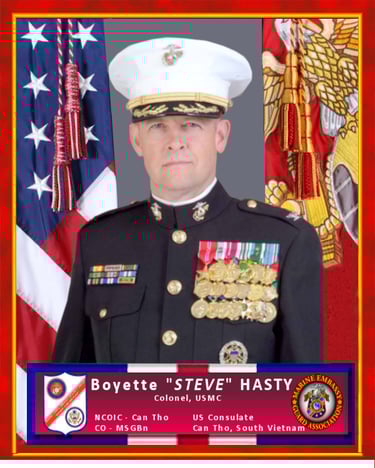
MSG / MSG Bn CO: Colonel Steve Hasty (Retired)
POSTS: NCOIC: Can Tho, South Vietnam / Commanding Officer, MSGBn
In this second half of our two-part conversation, retired Colonel Steven Hasty reflects on his time as Commanding Officer of the Marine Security Guard Battalion — a role he took on just weeks before 9/11. Overnight, the program’s priorities shifted as the world changed, and Hasty had to steer the battalion through uncertainty, manpower shortages, and new demands on security worldwide.
He addresses the persistent rumors that MSG might one day be turned over to another service, and why, in his view, that’s never going to happen. He shares his feelings about the loss of the Marine Bars that once anchored the social life of isolated posts, and weighs in on the debate over putting PFCs directly onto the program.
February 3, 2026
By Boat to Freedom: Evacuation of the U.S. Consulate in Can Tho
Post One Podcast Episodes
MSG / MSG Bn CO: Colonel Steve Hasty (Retired)
POSTS: NCOIC: Can Tho, South Vietnam / Commanding Officer, MSGBn
In April 1975, as South Vietnam collapsed, the Marines at the U.S. Consulate in Can Tho faced a mission no one had trained for: evacuating by boat. Retired Colonel Steven Hasty — the only Marine to have served as an enlisted watch stander, detachment commander, and later as the Commanding Officer of the MSG Battalion — recounts how he and his MSGs, alongside Consul General Francis Terry McNamara, led nearly 300 people down the Bissau River to freedom.
In this first of a two-part series, Colonel Hasty takes us inside those final days — from life as a detachment commander in a war-torn city, to the chaos of planning an evacuation without helicopters, and the remarkable boat journey that carried them to safety.
Book: Escape With Honor, My Last Hours In Vietnam
Author: Amb Terry McNamara w/ Adrian Hill
January 27 2026
Surviving San Salvador: The Deadliest Attack in MSG History
Post One Podcast Episodes
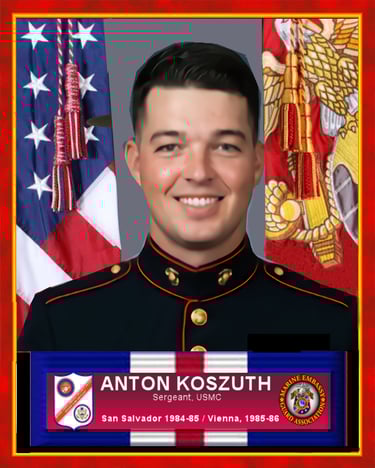
MSG: Anton Kozsuth
POSTS: San Salvador, El Salvador 1984-85, London 1985-86
On June 19, 1985, gunmen disguised as Salvadoran soldiers opened fire in a crowded restaurant district of San Salvador targeting U.S. Marines. In minutes, twelve people were dead, including four Marine Security Guards—the deadliest attack in MSG history.
In this episode, we hear from Anton Koszuth, a Marine Security Guard who survived that night. Anton recounts the chaos of the ambush, the split-second decisions he made to move civilians to safety, and the stark reality of relying only on a hand-held radio to call Post One. He reflects on the bonds between Marines, the weight of losing friends in an instant, and how the experience has shaped his life ever since.
January 20 2026
Terrorists at the Door: U.S. Consulate in Jeddah Attacked
Post One Podcast Episodes
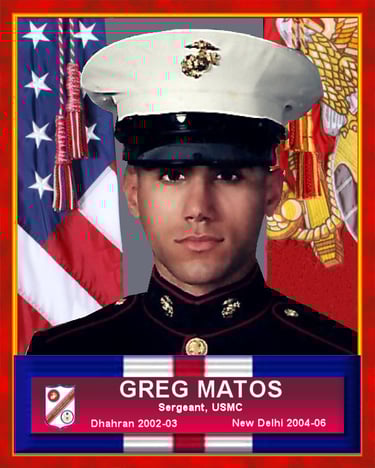
MSG: Greg Matos
POSTS: Jeddah 2002-03, New Delhi 2003-06
Dr. Greg Matos shares his harrowing experience as a Marine Embassy Guard during a terrorist attack on the American consulate in Jeddah, Saudi Arabia, in 2004. He discusses the events leading up to the attack, the decisions he had to make under extreme pressure, and the long-term impact of that day on his life and career. The conversation also touches on the importance of communication and relationships within the Marine Corps, the challenges of mental health support for veterans, and the evolving role of Marine Security Guards.
gregmatos.com / Instagram: @drgregmatos / Dr. Greg Matos on Facebook
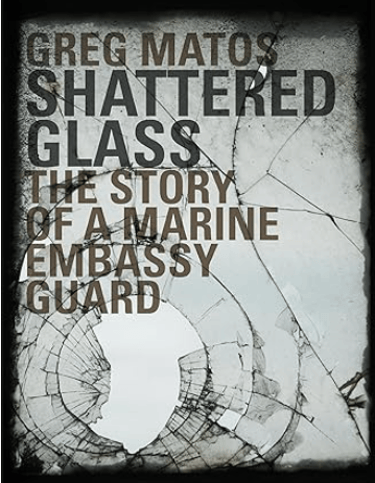
Book: Shattered Glass
Author: Greg Matos
January 13 2026
Full Hulk Mode: Detachment Commander Tackled and Life as an MSG
Post One Podcast Episodes
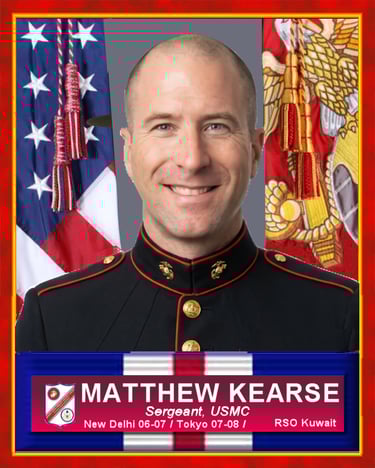
MSG: Matthew Kearse
POSTS: New Delhi, Chisinao, Tokyo
Former Marine Security Guard and former Diplomatic Security Service Special Agent Matthew Kearse joins the show to explain why he believes MSG duty is the best in the military. He shares a wild story of a detachment commander being subdued by two RSOs, breaks down the often-complicated relationship between RSOs and the Marines and explains what happens when that trust collapses. Matt also reflects on why many Marines struggle on MSG duty and how he successfully transitioned from the Marine Corps to the State Department.
January 6 2026
Not Done Yet: The Bombing of the U.S. Embassy in Nairobi
Post One Podcast Episodes
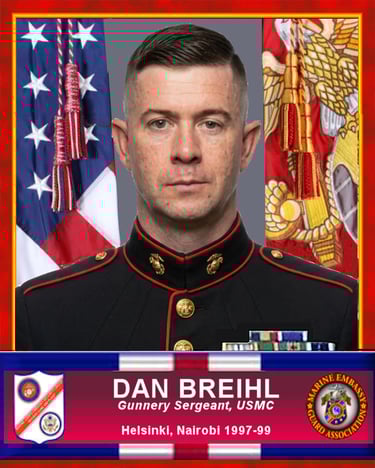
MSG: Daniel Briehl
Posts: Nairobi , Helsinki
Former Marine Security Guard Daniel Briehlrecounts his firsthand experience during the August 7, 1998 bombing of the U.S. Embassy in Nairobi, Kenya. He describes surviving the blast, falling down an elevator shaft, leaving the hospital, and hitchhiking back to the embassy to continue helping in the aftermath.
The episode captures the realities of pre-9/11 embassy security, the loss of a fellow Marine, and how the attack permanently shaped his understanding of duty and the Marine Security Guard mission.
©2026 James Curry
Send Send Comments
Send Comments, historical notes, MSG Names, Detachment Commanders/NCOICs, RSO, Regional/Company Leaders
Information will be added to the MSG detachment Pages and/or here in the Post One Podcast Page.