CURRENTLY EDITING
James Curry's Post One Podcast Links & Podcast background historical information
China Detachments (R3) Kinshasa (R6) Frankfurt (R8) Lagos (R7), Madrid (R5).Baghdad (R2), Jeddah (R2) Bujumbura (R6), Georgetown (R4) Belmopan (R9), MCESG Page, Harare (R6),
MSG HISTORY VOLUNTEERS ARE NEEDED : Research and display content for the MSG History Archives: Contact history@msghistory.com
Return/GoTo http://www.embassymarine.org (MEGA Home Page)
Chengdu, China
Deactivated 2022
MCESG Region 3 (MSGBn Company C)
(Volunteer Detachment Archivist Needed)
Send updates / corrections to history@msghistory.com
Detachment Photos: Chendu Photo Album
MAP: US Embassy Chengdu, China
Contact: history@msghistory.com
POTUS visits: Beijing / Nanking / Guangzhou (VPOTUS) / Hong Kong / Chengdu (VPOTUS) Shanghai / China
SECSTATE visits: Beijing /Nanking / Guangzhou / Hong Kong / Chengdu / Shanghai / China
US Ambassadors: China
Natural Disasters: Beijing /Nanking / Guangzhou / Hong Kong / Chengdu / Shanghai / Shenyang / China
Terrorism: Beijing /Nanking / Guangzhou / Hong Kong / Chengdu / Shanghai / China
Recognized: 1844 / Relations established: 1844 / Embassy established: 1844
1949: The U.S. embassy moved to Taipei, Formosa, when the Nationalist government of China fled to Formosa.
1973: The U.S. Liaison Office opened in Beijing.
1979: The U.S. withdrew diplomatic recognition from the Nationalist government in Taipei and recognized the PRC government in Beijing. The U.S. continues to provide unofficial relations with Taiwan. (see also Taiwan–United States relations).
Marine Corps Embassy Security Group:
MCESG / Region1 / Region2 / Region3 / Region4 / Region5 / Region6 / Region7 / Region8 / Region9 / MSAU / MSGTC
Together We Served: Beijing / Hong Kong / ***Chengdu / Guangzhou / Shenyang / Shanghai (No TWS Detachments)
US Embassy: Beijing, China
US Consulate: Guangzhou / Hong Kong /Shenyang / Shanghai
US Embassy Nanking: (closed April, 1949)
US Consulate in Chengdu: (Closed July 2020 - in retaliation for US Closing Houston, Texas Chinese Consulate)
US Embassy Taipei Republic of China: (Closed / deactivated February 28 1979 )
Britannica: Beijing / Shanghai / Guangzhou / Hong Kong / Shenyang / China
Google: Beijing / Shanghai / Guangzhou / Hong Kong / Shenyang / China
Wikipedia: Beijing / Shanghai / Guangzhou / Hong Kong / Shenyang / China
DOS History: Beijing / China
Travel: Beijing / Shanghai / Guangzhou / Hong Kong / Shenyang / China
Time: Beijing / Shanghai / Guangzhou / Hong Kong / Shenyang / China
Weather: Beijing / Shanghai / Guangzhou / Hong Kong / Shenyang / China
Phrase Book: Beijing / Shanghai / Guangzhou / Hong Kong / Shenyang / China
Google News: Beijing / Shanghai / Guangzhou / Hong Kong / Shenyang / China
X.com: US Embassy - Beijing
INSTAGRAM: US Embassy - Beijing /Shanghai / Guangzhou / Hong Kong / Shenyang /
FACEBOOK: US Embassy - Beijing /Shanghai / Guangzhou / Hong Kong / Shenyang /
FACEBOOK: MCESG MSGDuty Group
FACEBOOK: MEGA Group
YOUTUBE: 2015 - US Embassy Beijing
YOUTUBE: 2008 - New US Embassy Beijing
YOUTUBE: 2015 - POTUS Bush dedicates New Embassy
YOUTUBE: 2018 - Small Bomb blast outside Embassy
YOUTUBE: 2020 - China seizes US Consulate in Chendu
YOUTUBE: 2023 - 10 best places to visit in Beijing
YOUTUBE: 2025 - Where to eat in Beijing
YOUTUBE: 2025 - Food Tour 24 Hours eating in Beijing
COUNTRY INFORMATION
Recognized: 1844 / Relations established: 1844 / Embassy established: 1844
1949: The U.S. embassy moved to Taipei, Formosa, when the Nationalist government of China fled to Formosa.
1973: The U.S. Liaison Office opened in Beijing.
1979: The U.S. withdrew diplomatic recognition from the Nationalist government in Taipei and recognized the PRC government in Beijing. The U.S. continues to provide unofficial relations with Taiwan. (see also Taiwan–United States relations).
DETACHMENT HISTORY
(Source: Google Genini 18November2026)
The Marine Security Guard (MSG) Detachment at the U.S. Consulate General in Chengdu, China (No. 4 Lingshiguan Road, Wuhou District) operated as a designated high-threat counterintelligence post until the mission's forced closure in July 2020.
The primary historical security incidents, operational crises, and milestones affecting the Chengdu post and its MSG detachment include:
1. June 1989: Tiananmen Square Protests & Jinjiang Hotel Mob Attempt (Pre-MSG Detachment)
Context: Opened in October 1985 inside an annex of the Jinjiang Hotel, the Chengdu Consulate initially operated with a small American staff and no permanent MSG detachment.
Incident: On June 5, 1989, following the military crackdown in Beijing and the declaration of martial law in Chengdu—where violent clashes between troops and demonstrators left hundreds dead—an angry mob attempted to breach the Jinjiang Hotel housing the consulate. According to declassified State Department cables, the crowd's primary intent appeared to be looting rather than targeting diplomats, and staff remained safe, though the post was placed under severe lockdown.
2. Mid-1990s: Establishment of the Chengdu MSG Detachment
Context: In August 1993, the consulate relocated from the Jinjiang Hotel to its standalone compound at No. 4 Lingshiguan Road.
Activation: Following the move and an expansion of U.S. diplomatic security posture in China, a permanent MSG detachment (initially a small contingent of roughly eight Marines, including a Detachment Commander) was established by January 1995. (Note: During periods of billet transitions in the late 1990s, local contract guards supplemented exterior perimeter security while MSGs maintained internal access control and classified spaces).
3. May 1999: Belgrade Embassy Bombing Retaliatory Siege & Arson
Incident: On May 7, 1999, NATO warplanes accidentally bombed the Chinese Embassy in Belgrade, triggering state-tolerated anti-American riots across China.
Impact on Post: Protesters laid siege to the Chengdu compound for several days. Demonstrators scaled the perimeter walls, smashed through the consulate's outer doors, and used a metal bike rack as a battering ram to try to force entry into the interior chancery building while chanting for vengeance.
Arson & Evacuation: Rioters set fire to the Consul General's Residence, heavily damaging the structure. American personnel and families barricaded themselves inside the compound and on the roof of the staff apartment building while local security forces delayed intervening. Post security personnel extinguished a small fire on a consulate window, and city security forces eventually dispersed the crowd before the interior chancery was breached; no American personnel were physically injured.
4. April 2001: Hainan Island EP-3 Incident
Incident: Following the April 1, 2001 mid-air collision between a U.S. Navy EP-3E reconnaissance aircraft and a PLAN J-8II fighter near Hainan Island, bilateral relations entered an acute crisis.
Impact on Post: U.S. diplomatic missions across China—including Chengdu—were placed on heightened security alert (Threatcon/FPCON postures). Drawing on lessons from the May 1999 siege, the MSG detachment and Regional Security Office (RSO) prepared for potential nationalist demonstrations and restricted off-compound movement until the 24 U.S. aircrew members were released.
5. May 2008: Wenchuan (Sichuan) Earthquake
Incident: On May 12, 2008, a catastrophic magnitude 7.9 earthquake struck Sichuan Province, severely shaking Chengdu and frightening visa applicants and staff inside the consulate compound.
Impact on Post: While the consulate compound avoided structural collapse, the MSG detachment operated under emergency post-disaster conditions—managing compound access, supporting accountability for American citizens in the consular district, and facilitating security for high-level humanitarian visits, including Secretary of State Condoleezza Rice’s trip to Chengdu and Dujiangyan.
6. February 2012: The Wang Lijun Incident (High-Profile Asylum & Siege)
Incident: On February 6, 2012, Wang Lijun, Vice Mayor and former Police Chief of Chongqing, entered the U.S. Consulate General in Chengdu under the guise of a scheduled meeting, carrying classified documents detailing corruption and the murder of British businessman Neil Heywood by Gu Kailai (wife of Politburo member Bo Xilai).
Impact on the MSG Detachment: Wang remained inside the consulate for roughly 24 to 30 hours seeking political asylum. During this standoff, Chongqing Mayor Huang Qifan and armed police/security forces from Chongqing crossed provincial lines and surrounded the Chengdu Consulate compound, creating a tense perimeter standoff with Sichuan provincial authorities and Chinese Ministry of State Security (MSS) officers. The Chengdu MSG detachment maintained strict internal Post One access control and compound security throughout the crisis until Wang voluntarily exited the consulate on February 7 into the custody of central MSS officials from Beijing.
7. Early 2020: COVID-19 Pandemic & Emergency Staffing Shifts
Incident: Following the outbreak of COVID-19 in Wuhan in January 2020, the State Department ordered the departure of non-emergency personnel and families across China, while consular officers from Chengdu deployed on "Flyaway Teams" to assist with Wuhan evacuation flights.
Impact on Post: Travel restrictions, quarantine mandates, and billet freezes prevented normal MSG rotation schedules. In Chengdu, Assistant Detachment Commander Sgt. Devin M. Borders (meritoriously promoted to Staff Sergeant in June 2020) assumed duties as acting Detachment Commander to maintain continuous Post One watchstanding with a reduced footprint.
8. July 24–27, 2020: Forced 72-Hour Deactivation & Consulate Closure
Incident: On July 24, 2020, the Chinese Ministry of Foreign Affairs ordered the U.S. Consulate General in Chengdu to close within 72 hours, in direct retaliation for the U.S. government's closure of the Chinese Consulate General in Houston, Texas.
Deactivation Execution: Led by Detachment Commander SSgt. Devin M. Borders, the Chengdu MSG detachment executed a 72-hour emergency deactivation, sanitization of classified spaces, destruction/retrograde of sensitive security equipment, and evacuation of the compound.
Final Flag Lowering: At 6:18 AM local time on July 27, 2020, the Chengdu MSG detachment in dress blue uniforms conducted the final lowering of the American flag in the consulate courtyard. All U.S. personnel departed the compound prior to the 10:00 AM deadline, after which Chinese authorities entered the front gate and assumed control of the premises, permanently closing the post.
2024
Detachment Commander
Watchstanders
1979
NCOIC
Watchstanders
01 March: Detachment Activated
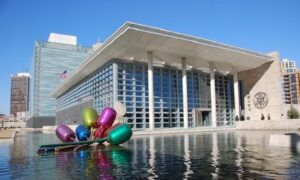
MSG Detachment Photo Album
Send pictures, descriptions and references to history@msghistory.com
1) 2024 - Photo Notes
2) 2023 - Photo Notes


Send your MSG History
Including Historical Incidents, MSG Names, Det Commander/NCOIC, RSO, Company Officers