Currently editing: Podcasts, Rome-Holy Sea (5), Tokyo(R3), Jakarta (R3), Seoul (R3), Kuala Lumpur (R2), Colombo (R2), Montevideo (R4), Santo Domingo (R4)
MSG HISTORY VOLUNTEERS ARE NEEDED : Research and display content for the MSG History Archives: Contact history@msghistory.com
Return/GoTo http://www.embassymarine.org (MEGA Home Page)
MSG HISTORY VOLUNTEERS ARE NEEDED : Research and display content for the MSG History Archives: Contact history@msghistory.com
Marine Corps Embassy Security Group: Home Page
Marine Embassy Guard Association: Home Page Member Login Guest Book / Latest News /

HISTORICAL ARCHIVES
of
MARINE CORPS EMBASSY SECURITY GROUP
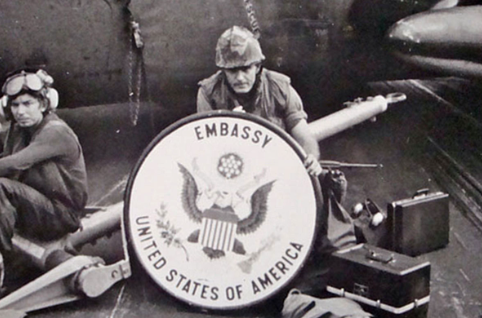
https://afsa.org/photos-vietnam

Welcome to the home of the Marine Embassy Guard Association (MEGA), Marine Security Guard Program Historical Archives.

The association membership is composed of those who have honorably completed tours as Marine Security Guards (MSGs) with the Marine Corps Embassy Security Group (formerly the Marine Security Guard Battalion) or those Marines who served as HQ or Regional support staff. Associate Members include member spouses, and Department of State Regional Security Officers and their support staff.

Formerly known as "Embassy Marines" and formed through an agreement established in 1948, between the US Department of State and the United State Marine Corps, Marine Security Guards perform security operations at overseas diplomatic facilities.

MEGA is celebration of solidarity and brotherhood of those MSGs that served. Formed in 1997 by our founder Robert "Big Bob" Kienietz and the organization and has grown steadily each year.

If you are a visiting MSG or former MSG, please review your details and forward any additional information, up-dates, corrections to: history@msghistory.com

*MEGA is open to all Marines who served honorably and completed tours with the Marine Security Guard program at all levels.

Join go to the MEGA Site at www.embassymarine.org

Mission

Our mission is to provide accurate and vetted information which reflects the history of the Marine Security Guard Program while ensuring operational security of Military, DOS and local personnel on post.

Vision

We want to provide a comprehensive library of information that archives the legacy of the Marine Security Guard Program and honors the sacrifices made by MSGs who have served at Department of State diplomatic posts around the world.

Team

The MEGA Marine Security Guard Historical Archives is a volunteer effort to research, archive and display the history of the Marine Corps Embassy Security Group.

This effort requires volunteers with a varied set of skills:

  • Archives Web Site Maintenance

  • Historical Archivists

  • Historical Research of On-Line Encyclopedias, Military, Dept of State and News Outlets

  • Interviewing MSGs


Contact Us

MEGA: contact@embassymarine.org
MSG HISTORY: history@msghistory.com

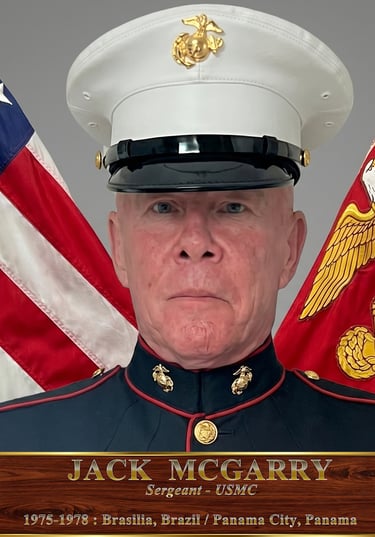
Jack McGarry
MSG History Site Admin

Mary Tracy
Historian

Joe Mitchel
Historian

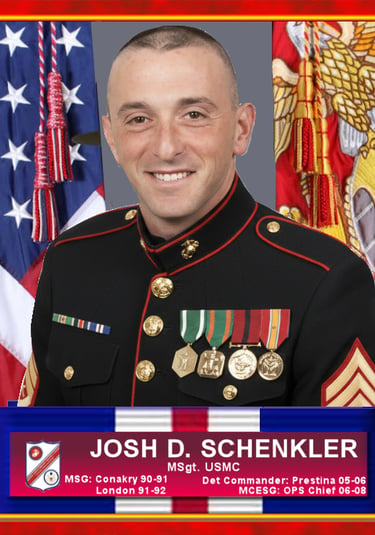
Josh Schenkler
Historian

MEMORIES of your Tour
"What is the most vivid memory you have from your tour(s)
either from your MSG experiences, or about the country / city you toured in?"
(Send your memory to Contact MSG history)

Don DeGarmo (Dhahran, Saudi Arabia ’77 / Paris, France ’78 / Havana, Cuba ‘79)

"Ruso"
In the summer of 1979, there were a lot of Russians in Havana, Cuba. They were all over the place. Everywhere you went – Russians, Russians, Russians. They were easy to identify. They didn’t have tans or look anything like a Cuban. Unfortunately, neither did I. I am very white and burn easy. Genetic defect, I think. Just kidding.

As I walked around the streets of Havana, I got a lot of dirty looks especially from the older pre-Casto Cubans. It was very common for them to have hatred on their faces and anger in their eyes. They pointed their index finger at me and yelled, “Ruso! Ruso!” Ruso in Spanish just means Russian. But they said it in a very derogatory tone. I would wag my index finger back at them and had responded, “No Ruso! No Ruso!” then point to myself and say, “Americano! Americano!” Since they did not know there were Americans in Havana, they wagged that same index finger back at me and responded, “No Americano! Ruso! Ruso!” Obviously, the pre-Castor Cubans did not like the Russians on their island. I was surprised because I thought the Cubans loved the Russians. Apparently not.

The Caribbean Islands had a festival that traveled to a different island every year. It was called CariFest (Caribbean Festival). It was like a county fair.

During the summer of 1979, the CariFest came to Havana, Cuba. They set it up in a parking lot in front of our building.

The U.S. Interest Section was the American Embassy but because we did not have diplomatic relations with Cuba at that time, it was called the U.S Interest Section. Same building, different name. I watched the Cubans set up a make-shift bar. They made two piles of wooden cases of beer then put a piece of wood across the top. There, a Cuban bar! Before they finished their fancy bar, there was a very long line of people waiting to get a beer. When they opened the bar, I noticed it was one person, one beer.

I was the Bar NCO at the time. My job was to keep the Marine bar fully stocked. So, I asked our interpreter, who we suspected as Cuban Intelligence, “Do you think the bartenderers will let me buy some beer?” He said, “They definitely will!”

He got a dolly and I got some Cuban Pesos. We walked toward the make-shift bar, and I stopped at the back of the line. My interpreter kept walking. I quickly caught up with him. When we came close to the bar, one of the two bartenders glared at us with such a look on his face and an attitude that suggested, “Who do you think you are cutting in line, and with a dolly.” So, we stopped in front of that bartender. My interpreter had his right hand on his right hip and his left hand casually draped over the dolly. He calmly spoke to him in Spanish. While he talked to him at length, I watched the bartender’s face change from, “Who do you think you are”, to FEAR. I mean he was very Scared to Death. I wished I knew Spanish.

After my interpreter stopped talking, he asked me how many cases I wanted. I told him 5. The bartender could not put the cases of beer on the dolly fast enough. I had never seen a bartender move so quickly. When I paid the bartender, the interpreter turned around with the dolly full of beer and walked back toward the U.S. Interest Section.

When we passed all of those people we had just cut in front of, with a dolly full of beer, I noticed the same look of hatred on their faces that I had seen so many times walking around Havana. I pointed to myself and said, “Ruso! Ruso!”

I looked at my interpreter to see if he was upset that I just blamed his Russian Comrades for what a U.S. Marine did. He did not have an expression.

Contact MEGA / MSG History